
JOURNAL
Cigar infusion, reduced to its essence.
Cigar infusion is not about adding flavor. It is about revealing dimension. This guide explains what cigar infusion truly is, how to do it properly, and why restraint matters.
What is cigar infusion, really?
Cigar infusion is the controlled transfer of aroma into a finished cigar, achieved without direct contact between liquid and tobacco. No soaking. No spraying. No artificial saturation.
Instead, infusion relies on time, volatility, proximity, and balance. A cigar is placed in a closed environment where aromatic vapors from spirits or natural elements gradually integrate with the cigar.
Anything fast is not infusion. It is contamination.
The ritual defines the intention. The method defines the result. If you want a complete technical breakdown, this guide explains how to infuse a cigar properly.
Why most infused cigars fail
Many infused cigars fail because they chase impact instead of harmony.
- Direct contact with alcohol
- Overexposure to strong aromas
- Using low-quality cigars as a base
- Treating infusion as flavoring, not ritual
The result is often a cigar that burns unevenly, loses structure, tastes artificial, and overwhelms the palate. True infusion should make you wonder what changed, not announce itself on the first draw.
The correct method: controlled aromatic transfer
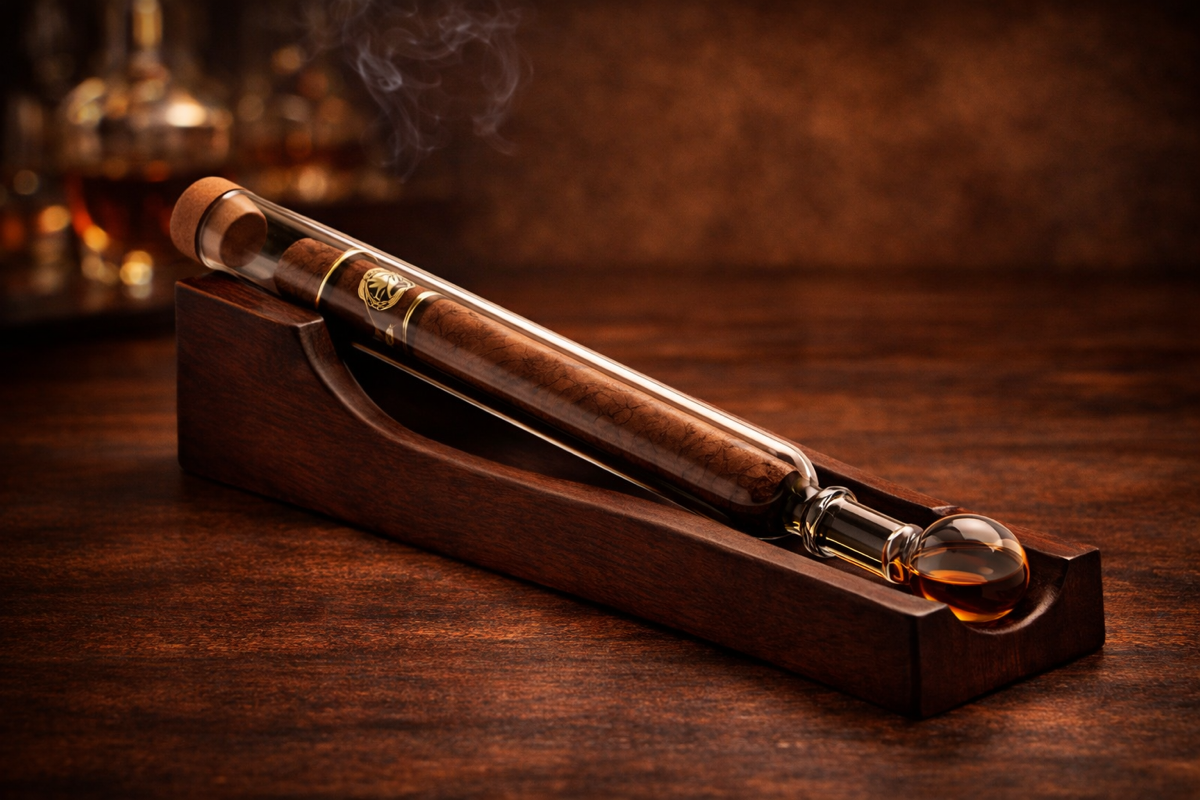
Proper cigar infusion follows one principle: the cigar remains untouched. The aromatic source is isolated, allowing only vapor to interact with the cigar over time.
- No liquid contact
- Stable environment
- Measured duration
- Neutral materials (glass, wood)
- Gravity-assisted separation
When done correctly, the cigar absorbs nuance, not moisture.
Which cigars work best for infusion?
Not all cigars are suitable. The best candidates are well-constructed, medium to full-bodied, and balanced rather than aggressive. Cigars with strong structure can carry secondary aromas without losing their core profile.
Infusion does not improve poor cigars. It exposes them.
Which spirits and aromas should be used?
Restraint is everything. The most successful infusions rely on mature, complex aromas, not sweetness.
Spirits that work particularly well:
- Whisky (especially aged, low-peat)
- Rum (dry, not spiced)
- Cognac and Armagnac
- Aged brandy
Natural elements that can work sparingly:
- Vanilla (whole bean)
- Coffee (dry, freshly roasted)
- Citrus peel (brief exposure only)
- Spices (clove, cinnamon, with extreme caution)
If an aroma announces itself loudly outside the container, it is already too strong.
How long should a cigar be infused?
Typical infusion windows:
- 5 to 7 days: subtle aromatic lift
- 8 to 10 days: deeper integration
- Beyond 10 days: diminishing returns
Infusion should stop before dominance. You are not trying to change the cigar’s identity, only its atmosphere.
Is cigar infusion reversible?
Yes, and that is a sign of quality. A properly infused cigar, returned to a neutral humidor, will slowly release excess aroma over time. This reversibility is proof that no liquid entered the cigar and the structure remained intact.
Permanent flavor usually means permanent damage.
Infusion as ritual, not modification
Cigar infusion should never feel industrial. It is slow, intentional, private, and repeatable. The act itself becomes part of the enjoyment, a quiet preparation that precedes the smoke.
Why we built Cigar Infuse
Cigar Infuse was created to eliminate guesswork, shortcuts, and excess. It exists to separate cigar from liquid completely, control exposure precisely, respect gravity and evaporation, and preserve the cigar’s integrity.
A proper cigar infuser is not a gadget. It is an instrument of restraint.
A final thought
If infusion is obvious, it failed. The best infused cigar does not announce itself. It simply feels complete.
The method described here reflects the same disciplined approach praised by members of the international cigar community, including figures involved in the Cigar Smoking World Championship.
For timing, cigar selection, and aroma pairing, read How to Infuse a Cigar Properly.
FAQ
Journal questions.
Does the alcohol touch the cigar?
No. The cigar should never be in contact with liquid. Proper infusion relies on controlled aromatic transfer only.
How long should cigar infusion take?
5 to 7 days is ideal for balance. Up to 10 days can work for deeper notes. Beyond that, the result usually becomes heavy and less refined.
What type of cigar is best for infusion?
Well-constructed, medium to full-bodied cigars respond best. They have enough structure to carry aroma without losing their core profile.
Which spirits work best for cigar infusion?
Whisky, rum, cognac, and aged brandy tend to integrate well. Choose complex, mature spirits and avoid anything overly sweet or flavored.
Can infusion ruin a cigar?
Yes, if done incorrectly. Liquid contact, excessive exposure, or poor storage can damage burn, construction, and taste. Correct infusion should preserve structure.
Is cigar infusion reversible?
In most cases, yes. A properly infused cigar will gradually soften when returned to a neutral humidor. If the aroma is permanent, the cigar was likely overexposed or contaminated.